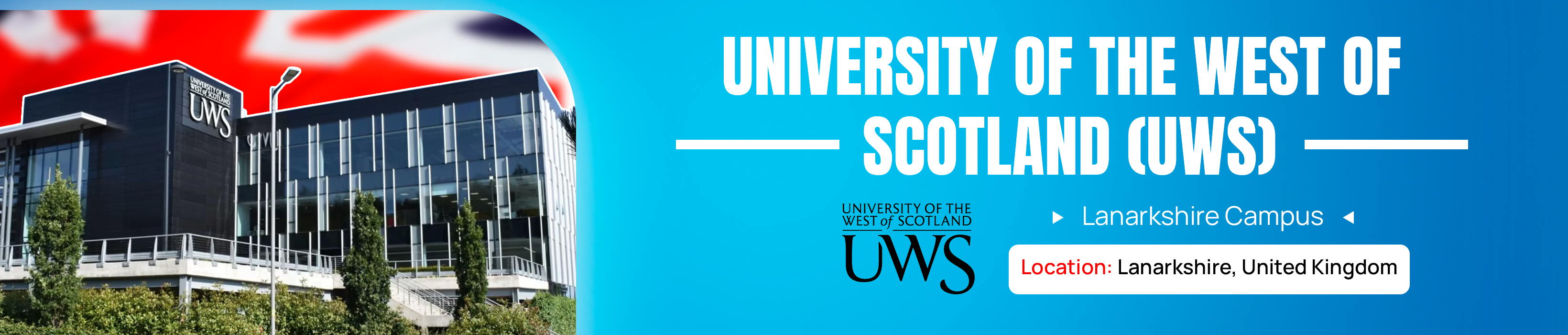
University of the West of Scotland, Lanarkshire Campus
Lanarkshire United Kindom, United Kingdom
🏫 University of the West of Scotland (UWS) — Overview
1. Basic Facts & History
- Type: Public research and teaching university in Scotland
- Established: Roots back to 1897 (Paisley Technical College); became the University of the West of Scotland in 2007 after merging with Bell College.
- Evolved from regional technical education into a modern, career-oriented university with multiple campuses.
2. Campuses & Locations
CampusKey FeaturesPaisleyHistoric central campus, offers a wide range of disciplines.LanarkshireModern, eco-friendly campus at Hamilton International Technology Park; houses cutting-edge teaching spaces and facilities.AyrRiverside, architecturally modern campus with a focus on sustainability.Dumfries (Crichton Campus)Smaller, multi-institution hub offering select programmes.LondonStrategic campus offering UWS programmes in England, popular among international students.
3. Academic Structure & Programmes
- Schools:
- School of Business and Creative Industries
- School of Computing, Engineering & Physical Sciences
- School of Health & Life Sciences
- School of Education & Social Sciences
- Courses:
- Offers undergraduate, postgraduate, and research degrees across a broad range of disciplines.
- Strong emphasis on career-focused, vocationally relevant programmes developed in collaboration with industry.
- Many courses are professionally accredited or aligned with UK professional bodies.
- Research:
- Key themes include health, society, and sustainability.
- Research spans business, computing, engineering, sport science, education, health, and social sciences.
- Reputation:
- UWS is recognised for its impact in sustainability rankings and for widening access to higher education.
- It is considered a modern university with a focus on practical skills, innovation, and regional development.
4. Key Strengths
- Industry Links & Employability:
- Courses are designed with industry input, helping graduates gain relevant skills for immediate employment.
- Modern Infrastructure:
- The Lanarkshire campus is environmentally advanced and built with collaborative learning spaces, solar energy systems, and flexible teaching zones.
- Geographic Reach:
- Multiple campuses provide both urban access (close to Glasgow and Edinburgh) and community-focused environments.
- The London campus adds further reach, particularly for international students.
- Support for International Students:
- Offers English language preparation, visa support, and a dedicated international office.
- Vibrant Student Life:
- Active student union, clubs, societies, sports teams, and events across campuses.
5. Challenges & Considerations
- Financial Pressures:
- UWS recently faced a significant cyberattack and posted a financial deficit of approximately £14.4 million.
- This led to job cuts and restructuring, which may affect some services or departments.
- Reputation Variability:
- While strong regionally, UWS is not among the top global elite universities, which may influence international perception depending on your career goals.
- Campus Differences:
- Facilities and experiences can differ by campus. Lanarkshire is modern and well-equipped, while some other campuses are more traditional.
- Dependence on Enrolment:
- Like many modern universities, UWS is sensitive to changes in student numbers and government funding.
6. Strategic Fit for Sport & Exercise Students
For students pursuing the MSc in Sport and Exercise:
- UWS provides professional alignment with UKSCA, BASES, and UKCC standards, making it highly relevant for those aiming for careers in coaching, strength & conditioning, or performance science.
- The Lanarkshire campus offers modern facilities ideal for practical sport science training.
- The vocational and industry-linked curriculum provides strong employability prospects in sports, health, and fitness sectors.
- Students should stay informed about departmental developments due to the university’s ongoing financial restructuring.